
As the ongoing Ebola outbreak caused by the Bundibugyo virus continues to spread across the Democratic Republic of the Congo and Uganda, researchers from Inserm, the University of Bordeaux, the Vaccine Research Institute (VRI), the Bordeaux Population Health Center, and IRD have published the first human immunological data that could help guide vaccination strategies against this emerging Ebola strain.
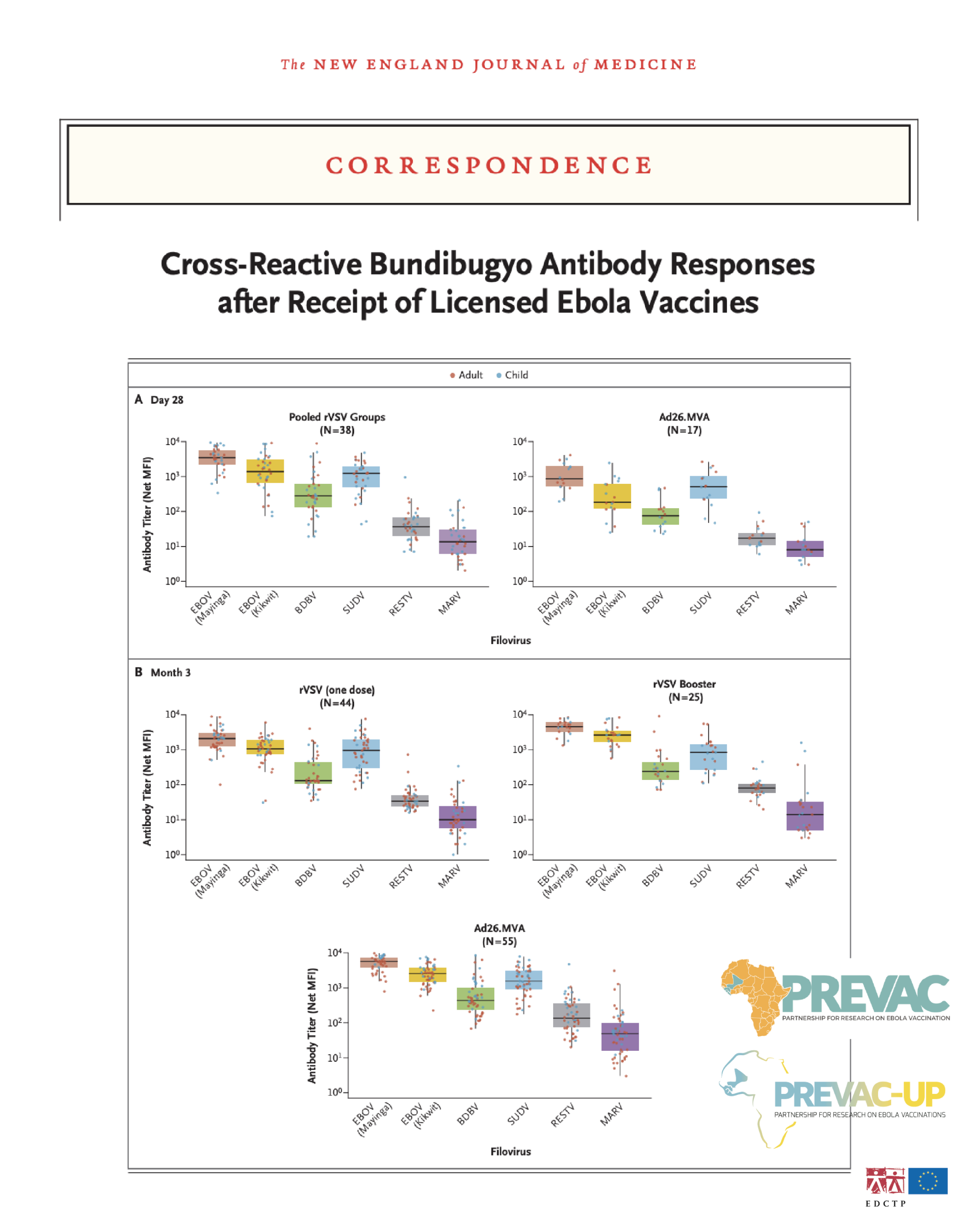
By analysing serum samples from participants enrolled in the PREVAC clinical trial, researchers found the two licensed Ebola vaccine strategies developed against the Zaire strain could also generated detectable antibody responses against the Bundibugyo strain in both adults and children.
While these findings do not demonstrate clinical protection, they support the urgent evaluation of existing Ebola vaccines until strain-specific vaccines become available. The study also highlights the need to develop next-generation vaccines capable of protecting against multiple Ebola virus species.
Published in the New England Journal of Medicine, this research also demonstrates the long-term value of investment in clinical research. The rapid generation of these results was made possible through the preservation of biological samples collected during the PREVAC trial and the continued follow-up of participants within the PREVAC-UP programme.
Scientists from EUCLID-MART played a central role in the study’s methodology and analysis. This work once again illustrates how international collaboration and robust clinical trial infrastructure can rapidly generate evidence to inform public health responses to emerging infectious diseases.
Source:
NEJM: https://www.nejm.org/doi/full/10.1056/NEJMc2608018
Published July 22, 2026DOI: 10.1056/NEJMc2608018